

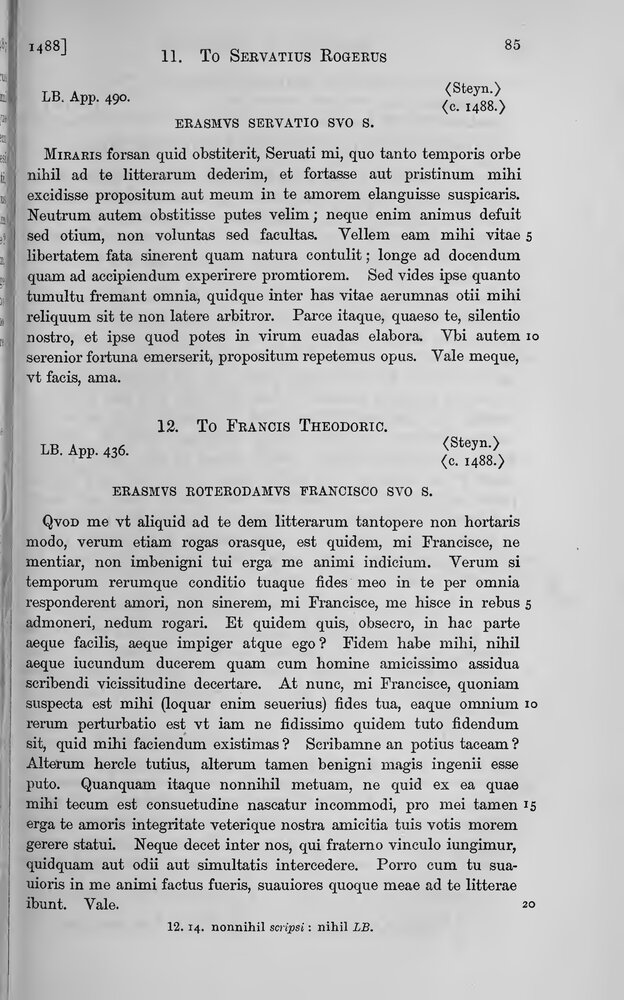
Erasmus responds to Francis Theodoric's repeated requests for correspondence, acknowledging his friend's persistence but expressing hesitation due to concerns about trustworthiness in their troubled times. He ultimately decides to write out of respect for their longstanding friendship and brotherly bond, while hoping for more sincere affection from Francis in return. The letter reflects Erasmus' internal conflict between caution and maintaining their relationship.
Erasmus of Rotterdam to his friend Francis, greetings. That you not only urge but even request and entreat me so earnestly to send you some letter, is indeed—I shall not lie, my dear Francis—no small indication of your goodwill toward me. But if the state of the times and of affairs, and your own trustworthiness, fully matched my love for you, I would not suffer myself, dear Francis, to be reminded in these matters, let alone entreated. And indeed, who, I ask you, in this matter is as ready, as diligent as I am? Believe me, I would count nothing so pleasant as to vie in constant exchange of writing with a most beloved friend. But now, my dear Francis, since your good faith is suspect to me—for I shall speak more severely—and such is the disturbance in all things that now not even the most trustworthy can safely be trusted, what do you think I should do? Should I write, or rather keep silent? The latter, by Hercules, is safer; the former, however, I think more befits a generous nature. Although, therefore, I may have some fear lest some harm arise from this intercourse I have with you, still, for the sake of my complete affection toward you and our long-standing friendship, I have resolved to gratify your wishes. Nor is it fitting between us, who are joined by a brotherly bond, that any hatred or enmity should intervene. Moreover, when you have shown yourself of a sweeter disposition toward me, my letters to you in turn will also go forth more pleasantly. Farewell.