


Erasmus responds to Cornelius Gerard's praise of the poet Hieronymus Balbus, expressing his views on poetic excellence and the distinction between being a poet versus a learned poet. He discusses the qualities necessary for true poetic achievement while maintaining a friendly, scholarly tone throughout the letter. Erasmus also requests additional poems from Gerard and expresses gratitude for their correspondence.
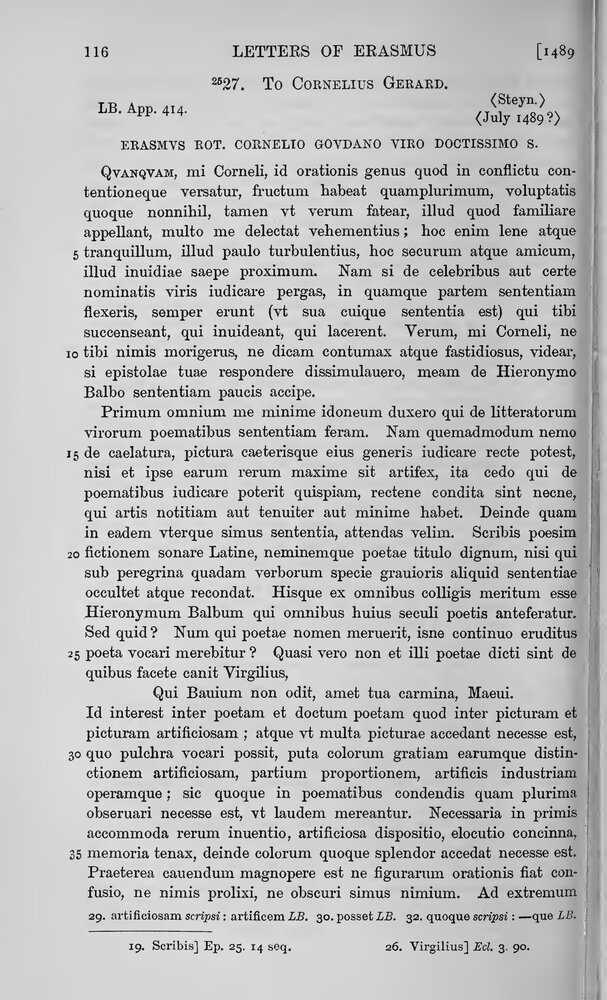
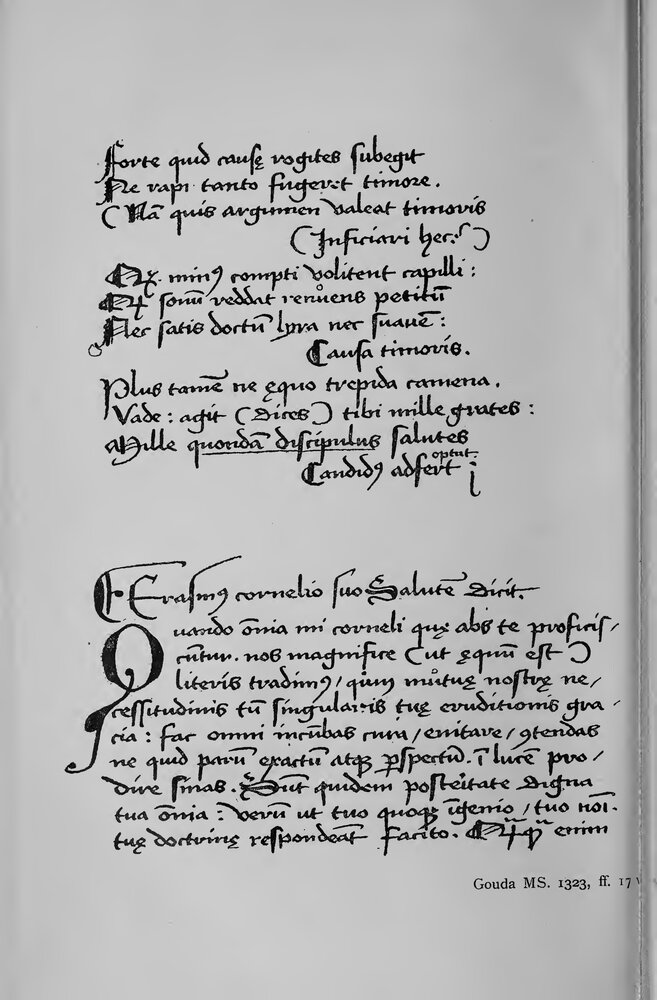
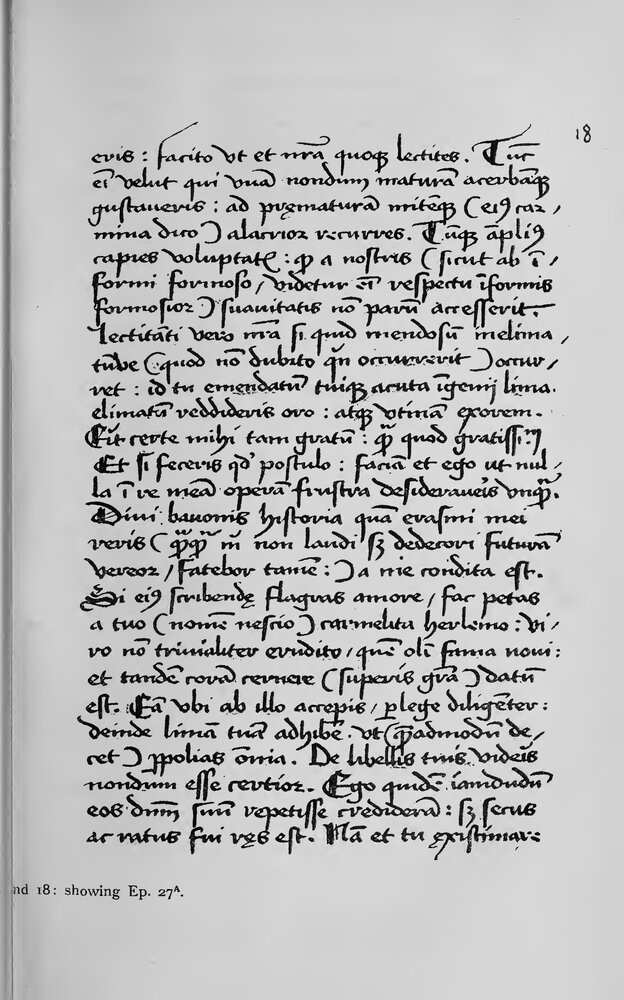
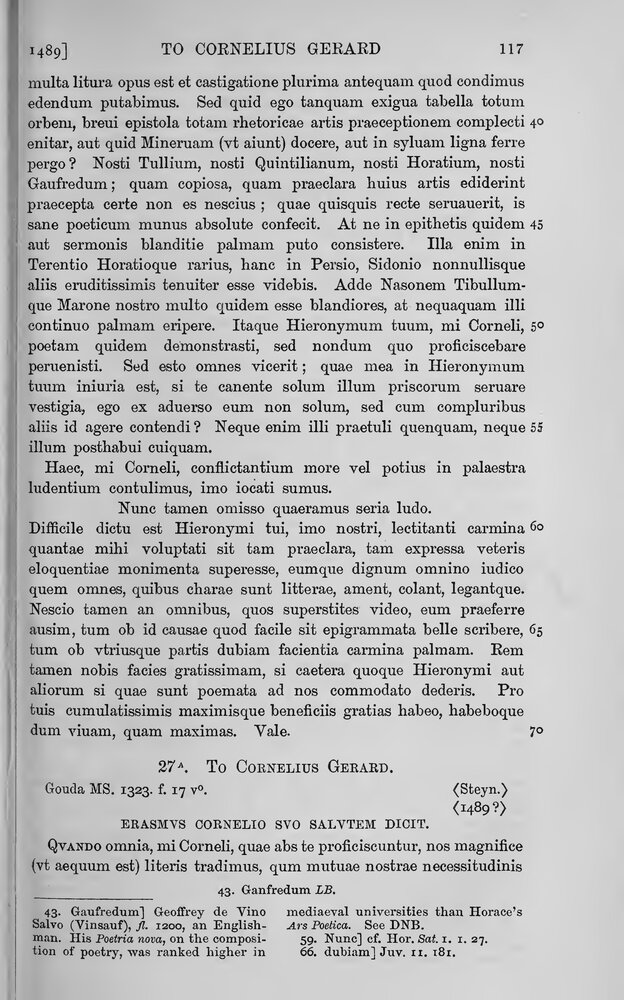
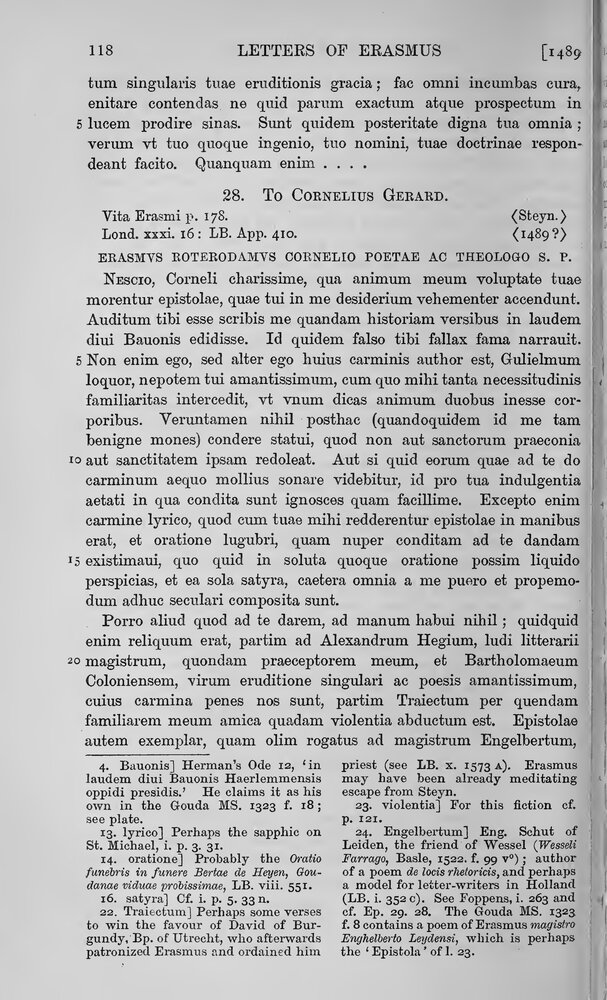
**Erasmus of Rotterdam to the most learned man Cornelius Goudanus, greetings.** Although, my Cornelius, that style of speaking which is employed in debate and contention yields the greatest profit and also some pleasure, yet, to tell the truth, that which they call the familiar style delights me far more intensely; for the latter is gentle and tranquil, the former somewhat more turbulent; the latter is secure and friendly, the former is often very close to envy. For if you proceed to pass judgment on famous or at least well-known men, to whatever side you incline your opinion, there will always be (as is each man's own view) those who will be angry with you, who will envy you, who will tear you to pieces. But, my Cornelius, lest I seem to you too compliant, not to say obstinate and disdainful, if I were to pretend not to answer your letter, receive my opinion of Hieronymus Balbus in a few words. First of all, I have considered myself entirely unsuitable to pass judgment on the poems of literary men. For just as no one can judge correctly of engraving, painting, and other arts of that kind unless he himself is a great master of those things, so I ask: how can anyone, who has a slight or no knowledge of the art, judge whether poems are correctly composed or not? Secondly, I would like you to consider how much we are both of the same opinion. You write that 'poesis' in Latin signifies a fiction, and that no one is worthy of the title of poet unless he conceals and hides something of weightier meaning under a certain foreign guise of words. And from all this you conclude that Hieronymus Balbus deserves to be preferred before all the poets of this age. But what then? Does he who has earned the name of poet thereby immediately deserve to be called a learned poet? As if indeed those of whom Virgil wittily sings were not also called poets: 'He who does not hate Bavius, let him love your verses, Maevius.' The difference between a poet and a learned poet is the same as that between a painting and an artistic painting; and just as many qualities must come together in a painting for it to be called beautiful—for instance, the charm of colors and their artistic distinction, the proportion of the parts, the diligence and labor of the artist—so also in composing poems, very many things must be observed for them to deserve praise. Primarily necessary are a suitable invention of subject matter, an artistic arrangement, an elegant style, a retentive memory; then too, a splendor of colors must be added. Furthermore, great care must be taken lest there be a confusion of rhetorical figures, lest we be too prolix, or too obscure. Finally, much erasure and very great correction is needed before we think fit to publish what we have composed. But why should I, as if on a tiny tablet, strive to encompass the whole world, or in a brief letter the entire precept of the rhetorical art? Or why do I proceed to teach Minerva (as they say), or to carry wood into the forest? You know Cicero, you know Quintilian, you know Horace, you know Geoffrey [of Vinsauf]; how copious, how brilliant the precepts of this art they have published, you are certainly not unaware; whoever rightly observes these has surely absolutely fulfilled the poetic function. But I do not think the palm rests even in epithets or the charm of language. For you will see the former is rarer in Terence and Horace, the latter is slight in Persius, Sidonius, and some other most learned men. Add that Ovid and Tibullus are indeed much more charming than our Virgil, yet they by no means thereby immediately snatch the palm from him. And so, my Cornelius, you have shown your Hieronymus to be a poet, but you have not yet reached the goal towards which you were proceeding. But suppose he has surpassed all; what injury is it to me concerning your Hieronymus, if, while you sing that he alone follows in the footsteps of the ancients, I on the contrary have contended that he does so not alone, but along with very many others? For I have preferred no one to him, nor have I placed him after anyone. This, my Cornelius, we have exchanged in the manner of contenders, or rather of those playing in the wrestling-school—indeed, we have jested. > 'But now, with sport set aside, let us seek serious matters.' Yet it is difficult to say, my Cornelius, what great pleasure it is to me, as I read the poems of your—nay, our—Hieronymus, that such brilliant, such vivid monuments of ancient eloquence survive, and I judge him wholly worthy to be loved, cherished, and read by all who hold letters dear. I am not sure, however, whether I would dare to prefer him to all whom I see still living, both for the reason that it is easy to write epigrams prettily, and because his poems create a doubtful victory for either side. You will, however, do me a most welcome favor if you will also lend me the other poems of Hieronymus, or of others if there are any. For your most abundant and greatest kindnesses I give, and as long as I live I shall give, the greatest thanks. Farewell. **Erasmus to his Cornelius, sends greetings.** Since, my Cornelius, we magnificently record in writing (as is right) everything that proceeds from you, both for the sake of our mutual friendship and of your singular erudition; apply all care, strive and contend that you allow nothing insufficiently precise and considered to go forth into the light. Indeed, all your works are worthy of posterity; but see to it that they also correspond to your own genius, your name, and your learning.